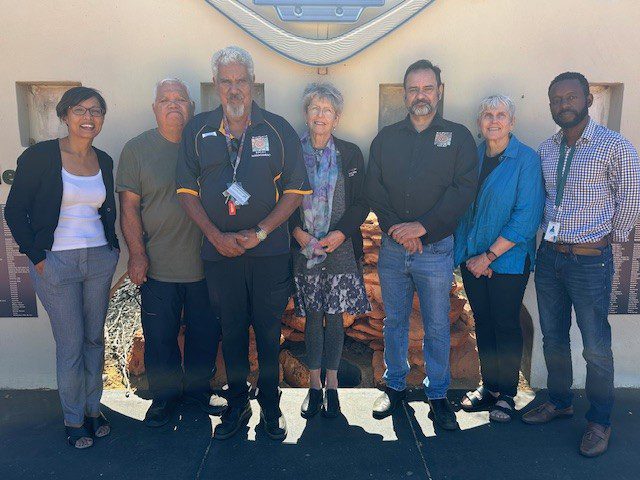
The Western Australian Centre for Rural Health (WACRH) and Bundiyarra Aboriginal Community (Aboriginal Corporation) have signed a landmark partnership agreement to work together to prevent family violence by engaging Aboriginal men across Geraldton, Mullewa and Northampton.
The two-year agreement formalises a shared commitment to deliver Yurla Wangga, a primary prevention program that supports Aboriginal men to challenge attitudes and behaviours that can lead to violence against women.
Yurla Wangga will bring Aboriginal men together in culturally safe, community-led workshops to have open conversations about respect, responsibility and leadership. The program supports men to strengthen healthy relationships and be positive role models for the next generation.
The agreement recognises the complementary strengths of both organisations. Bundiyarra provide cultural authority, community leadership and will host the monthly men’s group meetings. WACRH is providing evidence-based workshop materials and program evaluation.
WACRH Director Professor Sandra Thompson said the partnership reflects the importance of primary prevention.
“Primary prevention means stopping violence before it ever happens by addressing attitudes and beliefs that drive violence,” Professor Thompson said.
“It also means working in genuine partnership with Aboriginal organisations to ensure programs are culturally strong and community led.”
Bundiyarra Chief Executive Officer Wayne McDonald said the agreement reinforced the role of Aboriginal men as part of the solution.
“When men are supported to talk openly, learn from one another and reconnect with strong cultural values, real change is possible,” Mr McDonald said.
“This partnership strengthens our commitment to keeping women, children and families safe in the Mid West.”
The Yurla Wangga program will be independently evaluated by WACRH Public Health Medicine Registrar Dr Jean-Pierre Abega, who will assess whether the workshops lead to changes in attitudes and behaviours over time.
“This evaluation will help us understand what is working, how the program could be strengthened, and how these learnings could support prevention efforts in other communities,” Dr Abega said.